You’re reading CX Stories, a newsletter about customer experience innovation. If you want to join the 6000+ lovely people who receive it every month, just click the button below.
I’ve been reading Gill Ereaut’s excellent book on language (The Way We Talk Around Here: How your organization’s culture shows up in your language and why it matters), and it reminded me of a project I worked on, helping a bank’s contact centre team to give a better experience to people with buying homes.
As part of the project, we listened to about a hundred real customer calls. One stood out more than any other:
‘Can you confirm the mobile number of the joint party?’
‘The join… do you mean… do you mean my wife?’
‘Yes. We encourage you to book your appointment when both applicants are available, but if the joint party can’t make it, that’s ok’
‘Ok, I think she…’
‘If it’s not convenient for the joint party to be on the call, you just need written confirmation from the joint party, and we may need to call the joint party to confirm their acceptance’
The words ‘Joint Party’ became totemic throughout the organisation, a symbol of what happens when confusing, internal jargon comes out to customers.
But the thing is, whilst it’s easy to blame the frontline team for this, or the scripts teams have to use to be compliant, this kind of thing is usually just a symbol of what’s happening deeper (and higher) in the organisation.
Gill’s book highlights many ways that the organisational ‘discourse’ reveals the culture of the company, whether it be a gender bias, overly macho, or believing that your customers are criminals.
Sometimes this comes through in how customers are described, in a way that dehumanises them, such as calling them ‘policy holders’ or ‘claimants’, ‘back book’ and ‘front book’, or ‘beneficiaries’ when there’s been a bereavement. These make sense, but if you’ve had a close relative pass away, do you want to be described as ‘the beneficiary’?
Other descriptions can appear harmless, but reveal an underlying disrespect for customers. ‘Punters’ is thankfully less common than it was; ‘Rate Tarts’ one I heard a lot in banking in the 2000s, and the energy industry in the 2010s. Perhaps most shocking, just a couple of years ago I heard passengers in a transport business being described as ‘self-loading cargo’.
But it’s not all about how customers are described.
The most common example is how organisations talk about ‘winning’ customers, looking at performance through the lenses of ‘acquisition’, ‘retention’ and ‘churn’. I don’t know about you, but I’m not sure I want to be ‘acquired’, and I’m sure I don’t want to be ‘retained’. I guess maybe I churn, on occasion.
And that’s before you get to ‘extracting value’ and ‘driving engagement’ language which – as Gill talks about – suggests a sense of customers as resources to be mined rather than humans to be served.
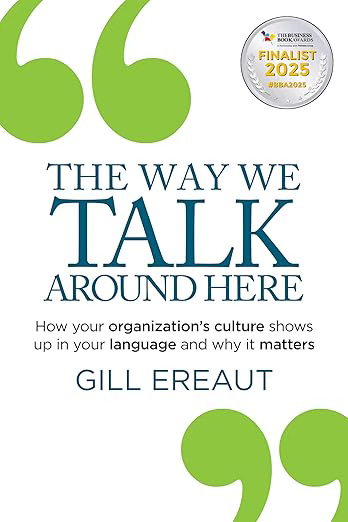
However, I think my favourite point in Gill’s book was something that’s bothered me since my early days in banking:
Educating customers.
‘If only our customers understood our industry more, understood what we have to go through, understood what we do for them, then they’d be much happier’ is the belief, with the answer that ‘we’re going to create FAQs, videos to help people understand, a newsletter with articles about us, and what we do.’
It’s a useful clue for companies. If you’re sending customers something – say, a bill – that requires you to make a 3-minute video explaining it, then the job is to make the bill more simple, not to educate customers on how to negotiate the inner workings of the industry.
As always, none of this happens on purpose.
Most people in most organisations are well-meaning, wanting to create a good experience for customers, wanting to respect the people they serve. But what Gill’s book brilliantly shows is how accidental this is, how natural this is, how easy it is for people to be surrounded by others talking in the same way, to the point where these linguistic traits become unnoticeable.
And the way you talk about your customers inside the organisation will come out in how you speak to them externally. If you don’t believe me, just ask your Joint Party what they think.
Thanks for reading this article, I really hope you enjoyed it. You can subscribe to my monthly newsletter below, find me in picture form on Instagram @johnjsills, or in work mode at The Foundation and LinkedIn.
 johnJsills