You’re reading CX Stories, a newsletter about customer experience innovation. If you want to join the 6000+ lovely people who receive it every month, just click the button below.
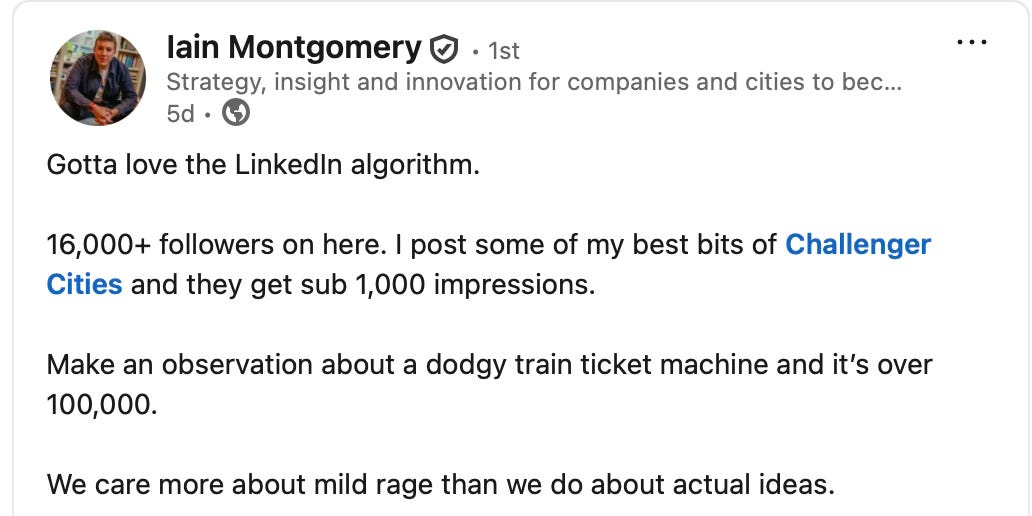
Last week on LinkedIn, I wrote a slightly grumpy post about a new pet hate: sending a message to a company, only for them to send an instant, automated, AI response, proudly declaring the issue is resolved.
I added it to my growing list of things that I find intensely annoying, such as:
- Do Not Reply email addresses
- No obvious contact number to call
- Being able to get through to a sales or ‘retention’ line but not a service line
- FAQ / ‘community’ articles instead of real help
- Chatbots that stop you speaking to a human
- Phoning up and repeatedly being told by an automated voice ‘did you know you can do this online?’ (yes I did because it’s 2025 and I’m aware of the existence of the internet)
- Phoning up, choosing the right options, then being told by an automated voice ‘you can do this online, thank you, good bye’ and the call being ended
The folk on LinkedIn added a few of their own:
When you ring up and you have to choose an option but none of the options are what you need
When they give you the option to request a call-back. Ring you once and hang up before you can answer
Unexpectedly long wait times that have been long for six years now
I find this the most interesting question in Customer Experience right now.
In trying to make everything ‘digital-first’, we’ve made it easy to do the easy things, and hard to do the hard things.
And with the advent of AI, the risk is that, whilst it’s brilliant at stripping away the faff, it may make it even harder for customers to speak to organisations when they need to.
I find it this interesting for two reasons.
Firstly, because those businesses only exist because those customers choose to use them. Given that, it’s probably not a good idea to annoy them.
(Some companies have tried to frame this as a benefit, a saving if you go online. There’s a logic to that – online, less people, lower cost. Very logical, very rational. But seeing a ‘phone admin fee’ of £26 doesn’t talk to the logical part of my brain; rather, it makes me think if I need you in a hurry, you’re not going to be there for me)
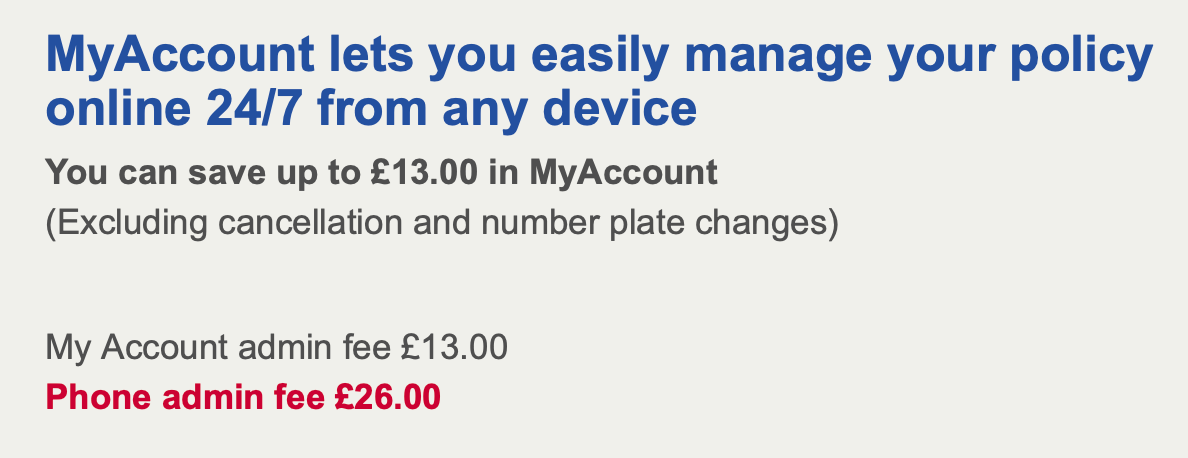
The second reason is that, from a national, economic point of view, it feels highly unproductive to have people wasting hours of their lives waiting on the phone and screaming into their screens.
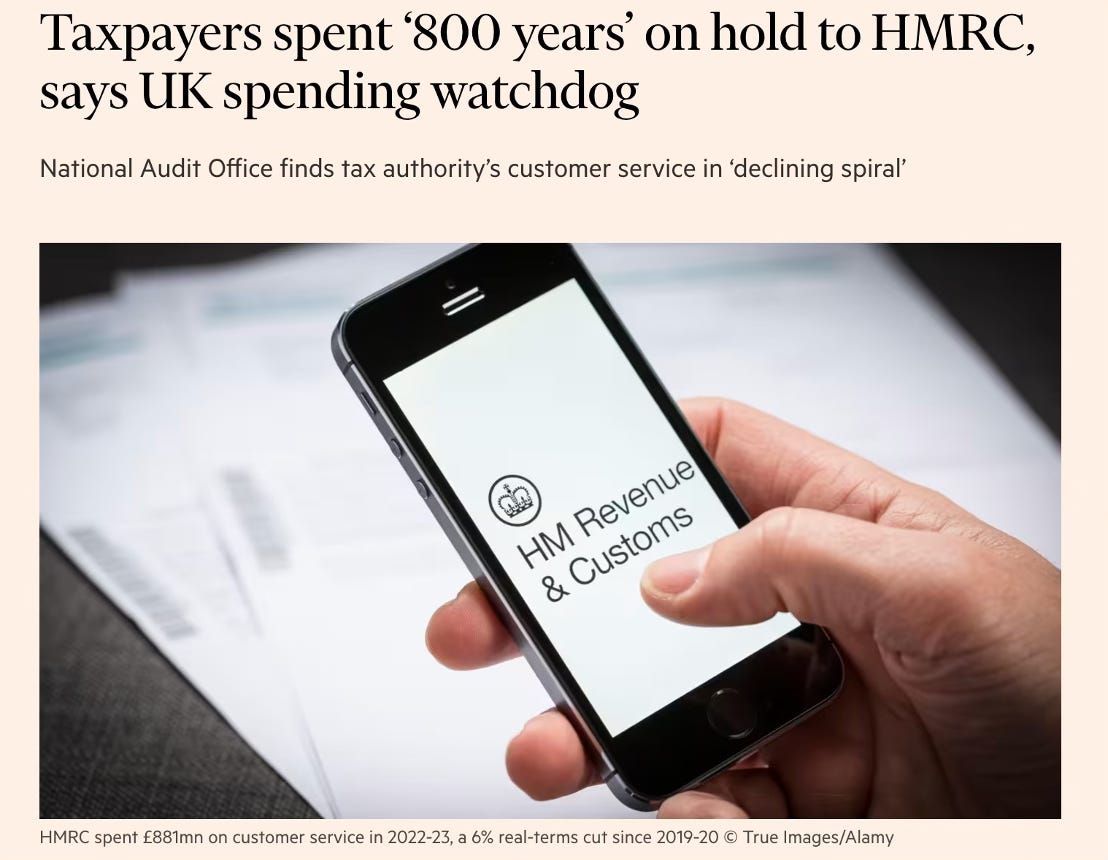
One study recently worked out that taxpayers spent nearly 800 years on hold to HMRC in 2022-23. 800 years. That would take you back to roughly the Middle Ages. Which is roughly where HMRC’s customer experience is.
I understand it for some companies, especially smaller ones. I phoned my local barber over the weekend to see if he was open. He didn’t answer, probably because he was cutting hair. I’m ok with that. And probably wouldn’t want a barber that answered their phone with one hand whilst hacking at my hair with the other.
But the large insurer who wouldn’t take my call when I needed to urgently know if I could drive my Mum’s car? They made over £2Bn profit last year. They could probably afford to pick up the phone.
I have to check myself here, though. Because whilst I’m moaning it’s hard to speak to a real person, it is, of course, exponentially easier to be a customer now than it was twenty years ago.
Can you imagine having to go into a bank branch every time you wanted to check your balance?
Or visiting an insurance broker every time your home cover was up for renewal?
Or only being able to do things between 9am and 5pm when you yourself were meant to be at work?
Surely that was also bad for productivity, rather than being able to do things at any hour of the day?
In fact, Human Progress recently shared data that shows American workers today 50% less time at work than they would have in 1900. Over the same period, real hourly wages have gone up 10-fold, and the inflation-adjusted price of leisure has dropped by more than half. So things aren’t all bad.
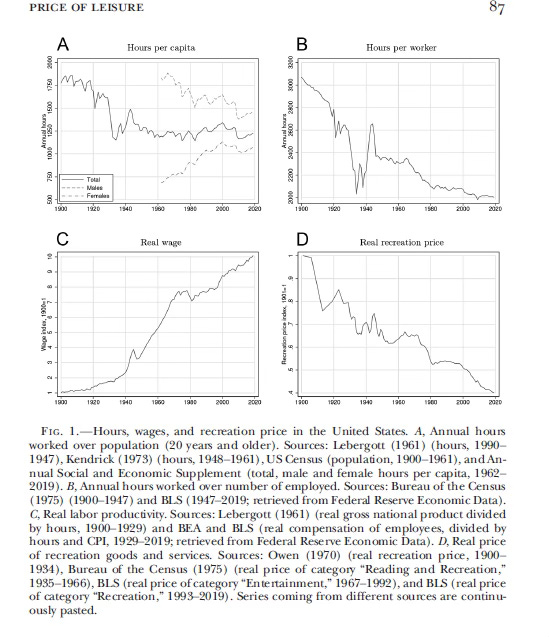
So why does it feel harder to be a customer at the moment? It could be that, like so many other unintended consequences of a digital life, it just feels like there’s more to do now. More inboxes to check, more notifications to read, more apps to open. Just how many times a day is it ok to check your ISA balance?
But I think there are three other things going on:
- Bad news travels fast
- Expectations rise with reality
- Prioritising the easy over the meaningful.
The first doesn’t take much explanation. Bad news travels fast, and bad news gets clicks. So we hear about the bad experiences more than we do the good. That means we’re more likely to share bad customer service stories with each other than we are to marvel every time we seamlessly log on and see how much electricity we’ve used.
The second, that expectations rise with reality, is what makes me feel sorry for HMRC. And I can’t believe I’ve just said that.
Janen Ganesh said this better than I could in the Financial Times. But in short, private companies making the customer experience so simple has put pressure on public services – without anywhere near as much funding – to be just as good.
Capitalism has raised expectations that are then dashed in almost every interaction with the state. The problem is not bad government … so much as a miraculous private sector. Consumer life has rewired people, sensitising them to inconvenience.
However, it’s the third reason that I think is mostly driving the frustration customers feel about not being able to contact organisations: prioritising the easy over the meaningful.
Because so much is able to be done so simply, the only time we want to speak to a person is when we really, really need to speak to a person. It might be it’s complicated, urgent, or emotional. Whatever the reason, those are the times we need help the most and that the company needs to be most accessible.
And those are the times that companies are found wanting.
The irony is that all this is usually done in the name of profit and efficiency – but in the long run, nothing destroys profit faster than disappearing when your customers really need you.
Which brings us back to AI.
AI should be used to take the pointless work away: the repeated questions, the form-filling, the ‘what’s my balance?’ moments. It could make both customers and employees more productive and happier, by freeing humans up for the hard, human conversations.
Instead, in too many places, it’s being used as another layer of defence between people and organisations – another way to take cost out, to protect profit, to avoid paying for humans to answer the phone.
In the first wave of the digital revolution, we’ve made it easy to do the easy things, and hard to do the hard things.
Let’s not make the same mistake again.
Thanks for reading this article, I really hope you enjoyed it. You can subscribe to my monthly newsletter below, find me in picture form on Instagram @johnjsills, or in work mode at The Foundation and LinkedIn.
 johnJsills