You’re reading CX Stories, a newsletter about customer experience innovation. If you want to join the 6000+ lovely people who receive it every month, just click the button below.
A couple of weeks ago, a leaflet dropped onto the doormat and created a frisson of excitement throughout the house.
Our favourite Indian restaurant – close to our old house, not really near the new one – had started to offer delivery. Which meant I could be reunited with one of the best curries I’d ever had.
However, the journey from getting that leaflet to getting the curry was far more ludicrous than I’d anticipated, and taught me a lot about the importance of companies taking ownership of the problems their customers have.
It’s not the first time I’ve written about this restaurant, actually. For those of you with long memories (or a copy of my book – have I mentioned I’ve written a book?) this was the place where the waiter once came over and asked if we’d leave a review on TripAdvisor.
We lied and said we would – not expecting the waiter to literally stand over us and watch whilst we got out our phones to do it there and then. He even checked the scores we gave.
Fast forward to this particular weekend and I put the order in on their website, placed the plates into the oven to warm up, and got the trays ready to lug everything into the living room (takeaway is a TV meal, after all).
Then I waited. And waited. And waited.
With over an hour gone since ordering, I rang the restaurant. With unnerving certainty and speed, the waiter told me:
‘I’m sorry sir, the driver has just left now, he’ll be with you in ten minutes’
Fifteen minutes later, still no sign.
I called again. What followed was a great example of excuses, rather than ownership.
‘I’m sorry sir, he will be with you soon. We’ve had an unexpected surge of orders.’
(I’m guessing you might predict – and hope for – a surge in orders on the day you put flyers through a thousand homes in the local area)
‘Why didn’t you just call me and let me know?’
‘Oh, we don’t have your phone number’
‘But I put it on the order form’
‘We don’t get that information passed to us’
At this point, the food arrived. My son opened the door, took the bags, and brought them into the kitchen.
Understandably, I was quite keen to get off the phone now and, y’know, eat the food.
Then things started to get weird.
‘To say sorry, let me give you a discount next time you order’
‘To be honest, I probably won’t get delivery from you again’
‘Ok, I’ll refund you ten pounds’
‘Ok’
‘It’ll have to be in cash as we don’t have your card details?’
‘But I paid with a card?’
‘We don’t get that information from the website’
‘Right’
‘Hold the line, let me see what I can do’
(I waited for a couple of minutes, enviously looking at the food being devoured in front of me)
‘Ok, you’ll have to come and pick up the cash’
‘I’m not going to do that’
‘Hold the line, let me see what I can do’
(I need to remind you at this point that I didn’t ask for this refund; this is not me being a Karen. For once.)
‘I’ll send my driver back to you now’
I hung up the phone, dished up my food, and sat down.
As I put the first forkful into my mouth, there was a knock at the door.
‘Hello sir – my manager says you owe us a tenner?’
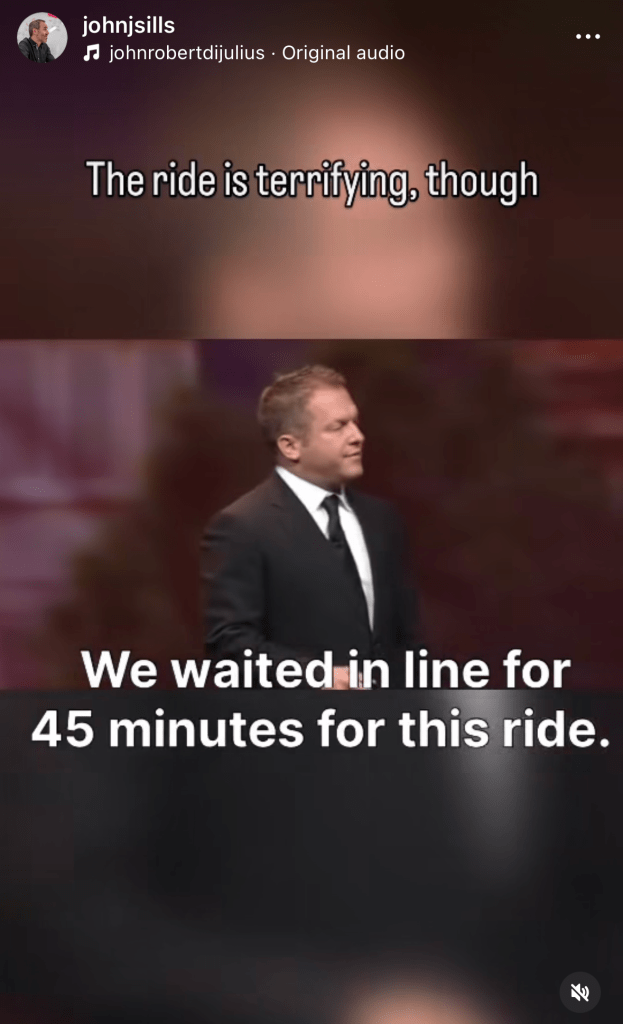
I recently shared a video about what Disney do when someone queues up for one of their rides, and then is too short to go on. That’s not their fault – the height signs are there. But rather than just send the kid away, they give them a voucher for the next time they visit which allows them to skip the queue.
Why? Because one of their mantras is ‘it’s not our fault, but it is our problem’.
In my Indian restaurant experience, it was very much their fault, and my problem.
We had a surge in orders. We can’t get your phone number. We don’t know your card details. Your food will be late. You’ll have to come to us to get the cash.
Admittedly, they did offer some money back. And in the end, their driver did arrive with some money – but the experience was far from the nice, relaxed takeaway I was hoping for.
But more than how I felt, think of the ‘failure demand’ for the restaurant. Calls from people wanting to know where their food is, refunds having to be given, drivers having to make return trips (which presumably delays other customers’ food – sorry neighbours.)
For both customers and organisations, owing problems and proactively resolving them will lead to much better outcomes – and maybe some 5* reviews without having to watch over them.
Thanks for reading this article, I really hope you enjoyed it. You can subscribe to my monthly newsletter below, find me in picture form on Instagram @johnjsills, or in work mode at The Foundation and LinkedIn.
 johnJsills