You’re reading CX Stories, a newsletter about customer experience innovation. If you want to join the 6000+ lovely people who receive it every month, just click the button below.
A few months ago, I wrote on LinkedIn how ridiculously proud I am of my Uber rating – a stunning 4.87. The post was swiftly filled with comments from people telling me that it wasn’t actually that good, compared to their 4.9’s, 4.95’s, and 5s.
Putting that inconvenient truth aside, I suggested the reason for my ‘unbeatable’ rating was because I make the ending of the experience great.
I always offer for the driver to drop me off slightly early, so they can swing round the roundabout at the end of my road and out again quickly.
I often tell them to mind the potholes on the road, because I don’t want them to damage their tyres.
And I always close the door really carefully – I’ve heard if you’re a slammer, they don’t like that.
In other words, I use the well-known Peak-End rule (popularised by the late, great Daniel Kahneman in Thinking, Fast and Slow), a finding that says when people recall an experience, they mostly remember any emotional peaks, and how the experience ends.
The Peak-End rule pops up in all kinds of customer experiences now, often via food-based goods.
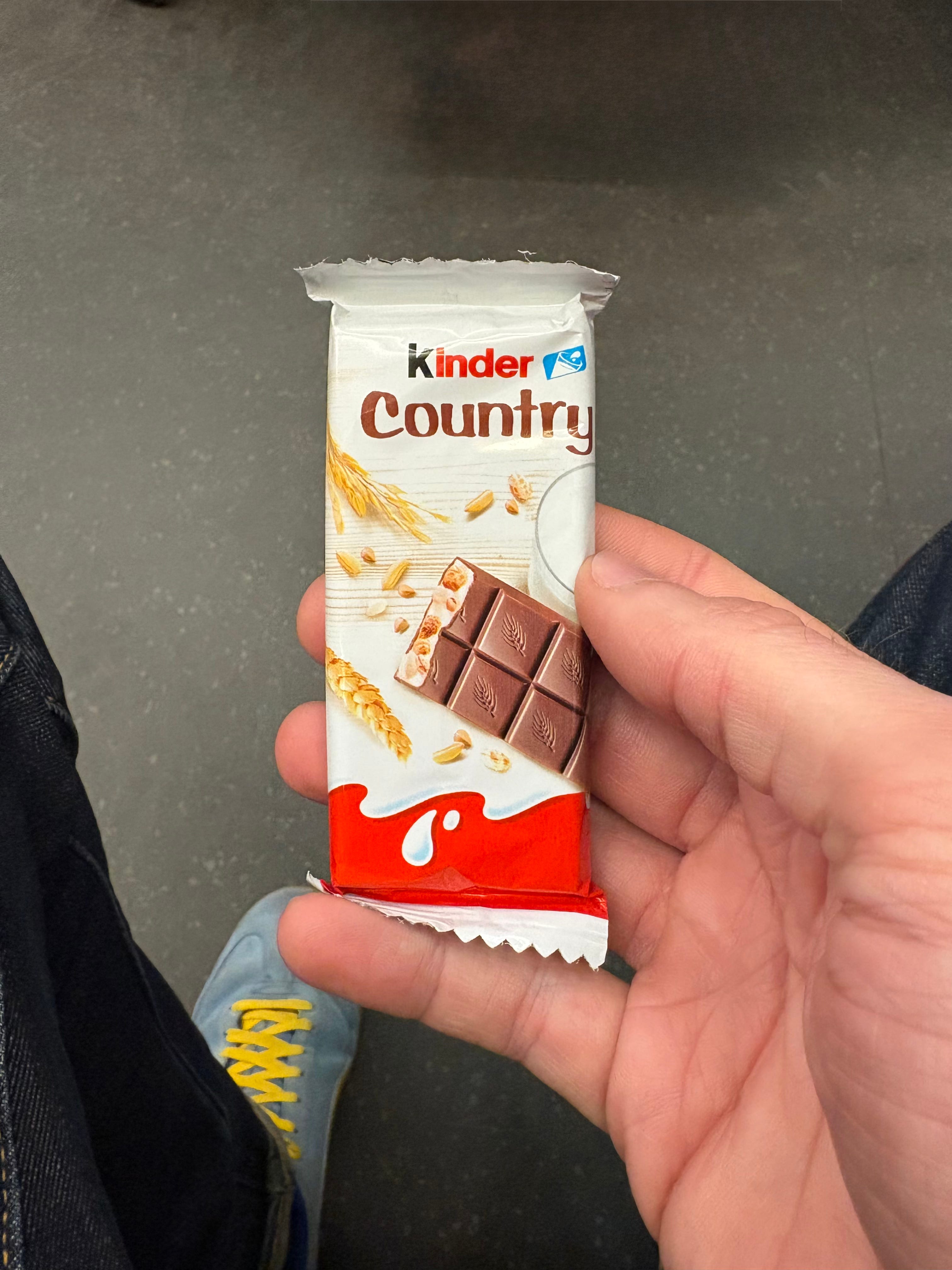
The last time I walked off a Eurowings flight, the air steward was handing out chocolate bars to passengers as they got off (yes, the Germans really are Kinder (credit: Nick Bush).
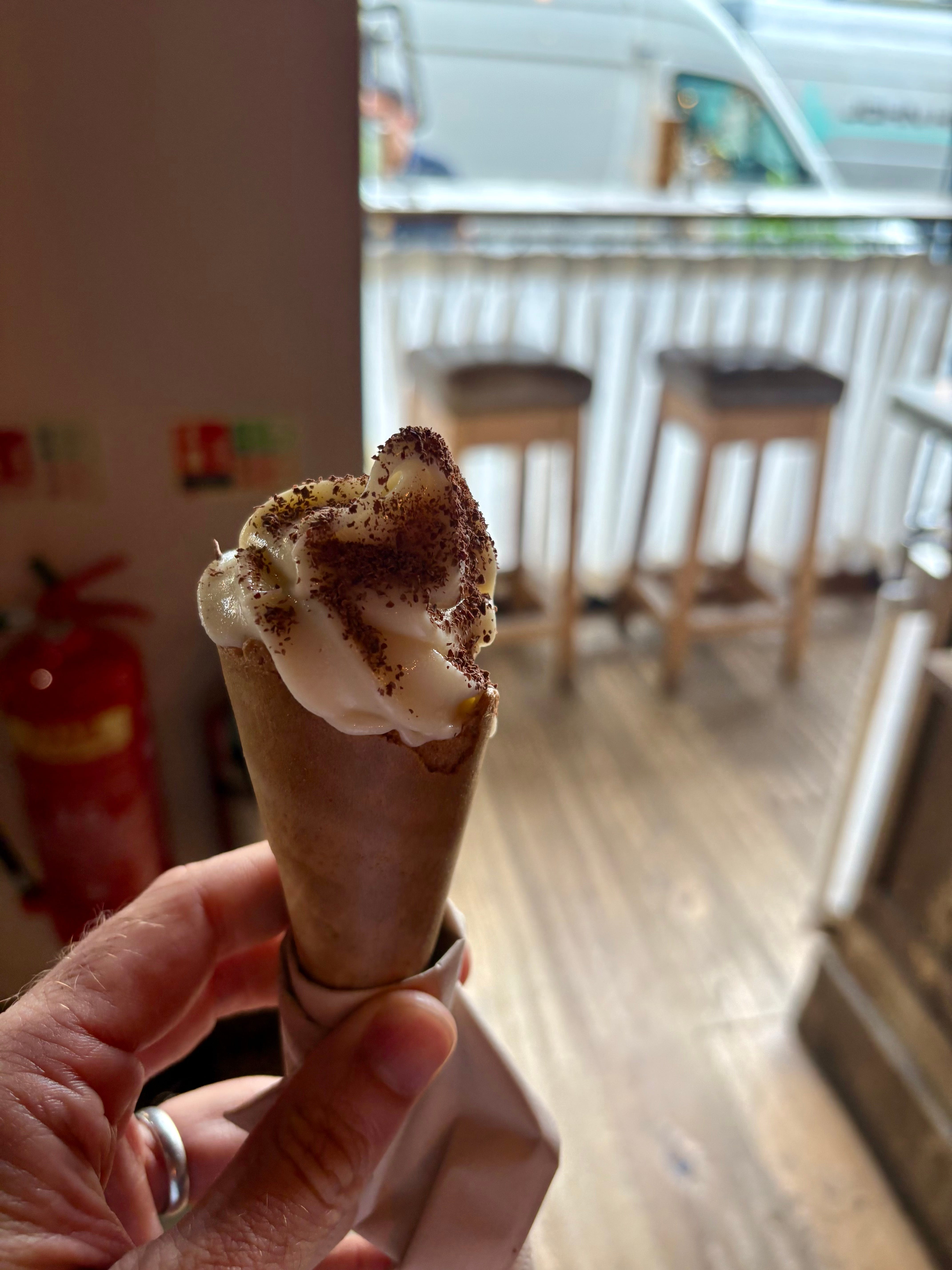
At Flat Iron, accompanying your bill is a little silver meat cleaver token that you can swap for an ice-cream on the way out.
And the last time I bought a car, the final email I received said:
“You’re going to receive a survey and I’m going for promotion next month so I’d be ever so grateful if you score me 5 out of 5”
Actually maybe that one’s not so good.
There’s a risk that these types of ideas seem a bit gimmicky, a cheap add on to try and earn extra marks on the inevitable Trust Pilot review. And of course, these things are only nice-to-haves if the rest of the experience has been broadly fine.
My Eurowings flight was good – took off on time, landed on time, comfortable enough. So in that context, the Kinder bar was a nice little extra. But if we were landing into Heathrow two hours late having had rude start and a child kicking the back of my chair, it’s likely I’d have been looking at that Kinder in disdain and suggesting creative places for the air steward to store it.
But the best examples of peak-end rule aren’t gimmicks at all. In fact, they’re the ones we don’t notice.
Imagine someone describes to you the concept of Disneyland. You’ll spend all day fenced in, surrounded by screaming children, routinely moving from one hour-long queue to the next, in which you’ll feed your kids anything they want and let them watch anything they want to try and distract them from the fact they need a wee (pro parenting tip if you have boys: always carry an empty water bottle), all so that you can go on a ride that lasts two minutes and leaves you all wanting to vomit. Oh, and you’ll have to remortgage your house to pay for the privilege.

But people love it, because the experience of the ride makes them forget the pain of getting there (albeit it should be said Disney are good at making the queue bearable, but that’s a whole other post).
The same is true with wait times on the phone, or queueing to speak to someone. It can be frustrating at the time, but if when you get through you get dealt with really well, people rarely remember the wait. It’s only a factor if the problem isn’t dealt with: ‘I had to wait 20 minutes to get through, and they still couldn’t help me!’
It’s for this reason that Average Handling Time is a poor measure for contact centre success. In all of our work, allowing colleagues more freedom on the phones occasionally leads to longer calls – but it always leads to higher customer satisfaction, higher colleague satisfaction and – crucially – higher first contact resolution / lower repeat phone calls, more than negating and operational loss of a longer AHT.
So next time you design how an experience ends, by all means give out free confectionary – but more importantly, make sure you’ve done what the customer wants you to first.
Thanks for reading this article, I really hope you enjoyed it. You can subscribe to my monthly newsletter below, find me in picture form on Instagram @johnjsills, or in work mode at The Foundation and LinkedIn.
 johnJsills