You’re reading CX Stories, a newsletter about customer experience innovation. If you want to join the 6000+ lovely people who receive it every month, just click the button below.
My Dad used to collect old newspapers.
Well, I guess to him they were just newspapers. But now they’re pretty old.
As much as I enjoyed seeing how the stories of the time were reported, what I really love is seeing the old adverts. The Wrigley’s adverts that promised if you chewed their gum, women would fancy you. The smoking adverts that promised if you smoked their brand, women would fancy you. The clothes adverts that promised if you bought this suit, then women would…. (It’s fair to say 1930s adverts had a very clear segment and ‘benefit’ in mind).
This one caught my eye, for a metal works in Islington. In a world of convoluted corporate values and purposes, its aim is so brilliantly simple.
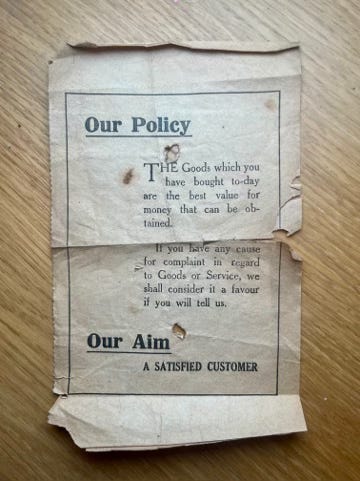
‘A satisfied customer’. That’s it. Of course, that’s it. What other aim could there be? After all, revenue only comes from earning customer decisions in your favour, not from your products and services alone.
Yet over time, it feels like this has been forgotten by organisations, with less focus on earning customer decisions, and more focus on buying them.
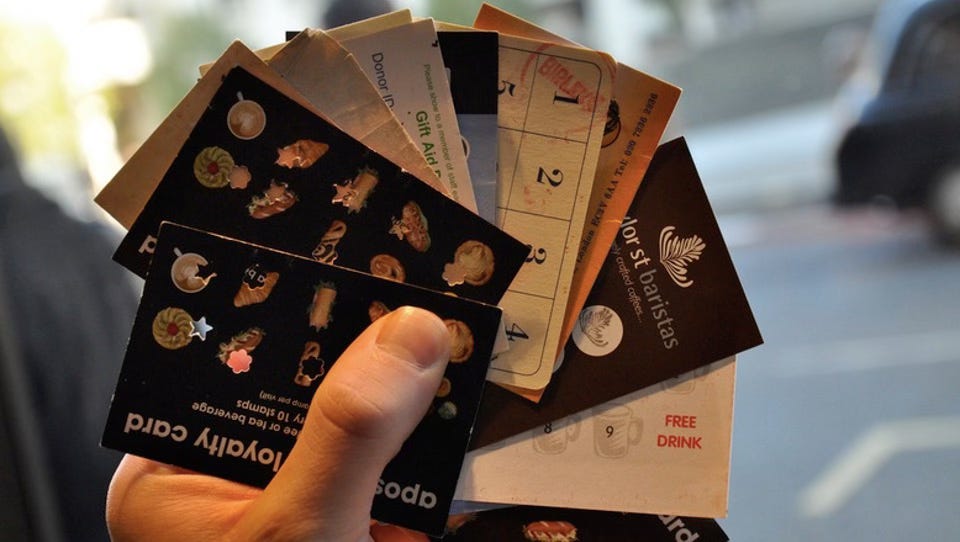
Genuine relationships have been replaced by bought ‘loyalty’, offering points and prizes, or literally giving people money to join and stay, whilst industry after industry has allowed itself to become commoditised, competing through comparison websites or new customer offers.
And the problem with that approach – aside from the fact that it’s easily gamed by people who now see more benefit in gaming the system than staying with the same organisation – is that it’s fairly easy for a competitor to come along and offer to buy those decisions for a little bit more.
It’s a bit like offering to take someone to a really nice restaurant to hang out with you. They might get to like you whilst you’re there, but really they only want the free food. And if you start dating someone who is more interested in the food than they are in you, don’t be surprised if they go elsewhere for a meal the next time one is offered.
Now, I don’t believe in customer loyalty. And I think the fact that many leaders do means that once they’ve got a customer to sign up, they stop trying to impress them.
I’ve argued before that a better word for it is usefulness – companies stay chosen by staying useful. But the word loyalty isn’t going anywhere, so rather than keep fighting it, let’s look at how you actually build the thing the industry claims to want.
The trick is to stop treating it as absolute, binary, binding, and start seeing it as a fabric, woven over time.
The fabric of loyalty
I see a customer’s relationship with a company as a bit like a piece of fabric, that starts small and grows over time. It has four elements to it: Threads, Wear, Tear, Repair.
Threads: the material added to the fabric over time, small and big pieces added as organisations do things that are genuinely useful to customers. They can be small – having an easy-to-use app – or big – being there when something goes wrong. As these moments build up, they strengthen the relationship, giving an elasticity to survive any small errors or disappointments that may occur.
Wear: the cumulative damage to the fabric that occurs over time from small annoyances. A ‘Do Not Reply’ email address. A confusing letter. A price rise, or a broken promise. The things that make you think less of a company and reduces your tolerance if something were to go wrong. When the fabric gets too thin, you start thinking about replacing it with a new one.
Tear: the big moments that cause lasting – perhaps irreparable – damage to the fabric of the relationship. The moments where a company gets it really wrong, causing significant stress or loss, or fails to be there when its’s really needed. These don’t have to be individual to the customer, either – think a bank losing data, a retailer with a cyber-security breach, a drinks company caught in a scandal.
Repair: the moments where a company manages to fix the fabric before it breaks: a genuine apology, a problem well dealt with, a personal contact from someone in charge. It’s the extra effort put in to fix the relationship, to try and make it as strong as it was before.
So rather than trying to bring customers in the door, then hope you’re good enough to keep them using you, organisations need to carefully build the relationship over time, adding threads, doing quick repairs, and reducing wear or tear that might break the relationship apart.
It should be enough to stop customers looking elsewhere – and keep them satisfied until today’s newspapers are old and faded.
Thanks for reading this article, I really hope you enjoyed it. You can subscribe to my monthly newsletter below, find me in picture form on Instagram @johnjsills, or in work mode at The Foundation and LinkedIn.
 johnJsills