You’re reading CX Stories, a newsletter about customer experience innovation. If you want to join the 6000+ lovely people who receive it every month, just click the button below.
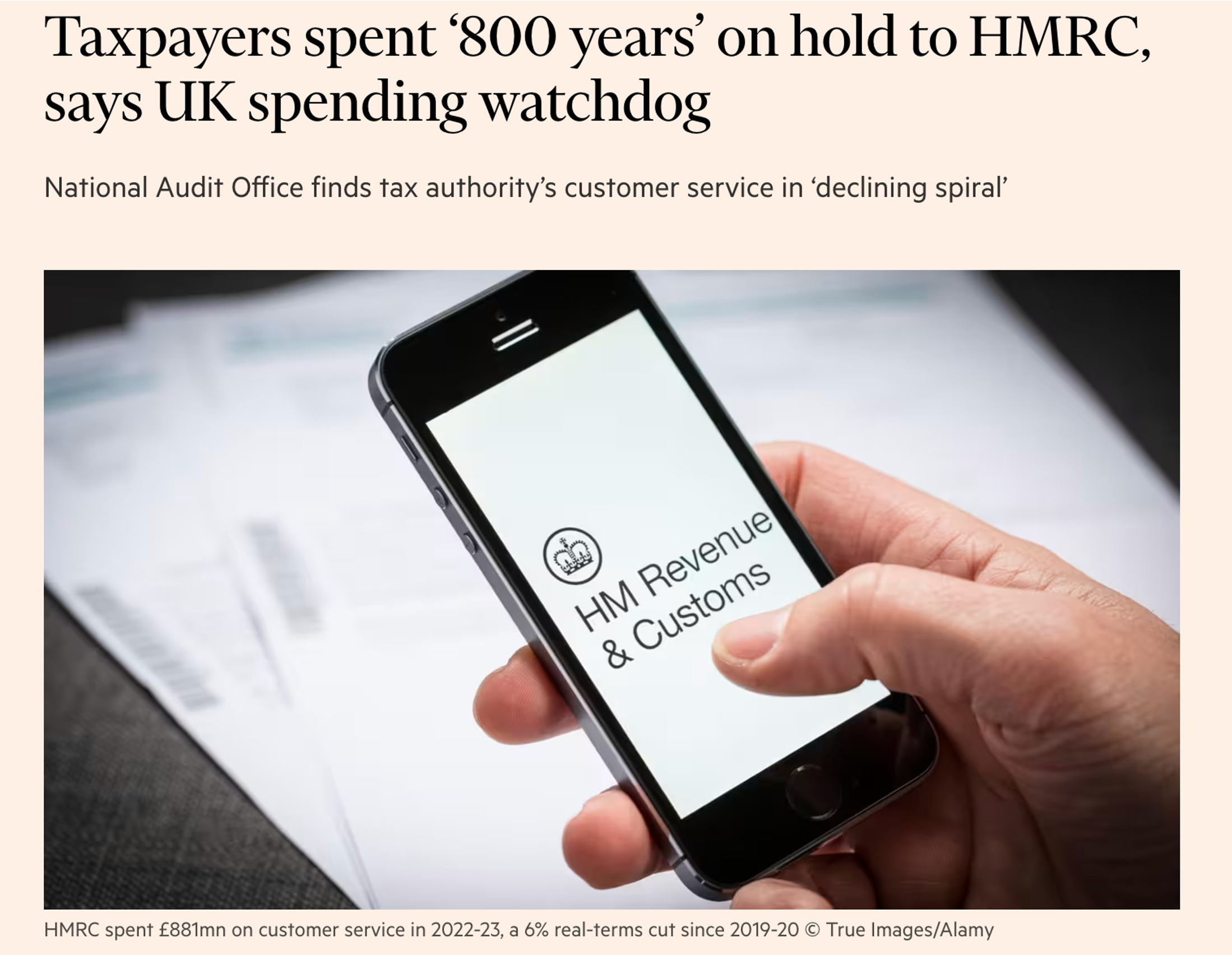
A couple of years ago, the Financial Times reported that Taxpayers (i.e. people) had spent a combined total of 800 years on hold trying to get through to HMRC. 800 years. That takes you back to roughly the Middle Ages. Which is roughly where HMRC’s customer experience seems to be.
However, having had the unfortunate pleasure of having to deal with them a lot in the last couple of years, it’s pretty clear to me that, like most companies, this isn’t because of a lack of intent. The organisation has become so complex, the systems so confusing, that even if the people that work there wanted to give a great experience, it’s almost impossible for them to.
When my colleague Florrie Hodgkinson told me about her recent adventure with them, it felt CX Story worthy. And so here it is.
The day had begun with big government news: Keir Starmer was resigning as Prime Minister of the UK.
I had a more modest item on my to-do list. I needed to read a message in my online tax account.
The night before, I’d spent an hour trying to do exactly that, having been prompted by an email they sent me.
I could log in to my HMRC account without a problem. I just couldn’t seem to open the message (despite trying to repeatedly log in and out, the online equivalent of ‘turn it on and off again’).
Apparently, I needed a specific Government Gateway login, and to sort that out I’d have to call them during contactable hours. Sounded simple enough. So as the news of Starmer’s demise broke the next morning, I decided to get it out of the way and pick up the phone.
There was over a minute of recorded preamble before I could confirm why I was calling and choose who to speak to. The blurb finished up with a question:
‘How would you rate today’s service with HMRC? Please help us out by filling in the survey we’ve sent to your phone.’
I hadn’t spoken to anyone yet or given them any details of my problem. Maybe they were hoping they’d get a better score that way.
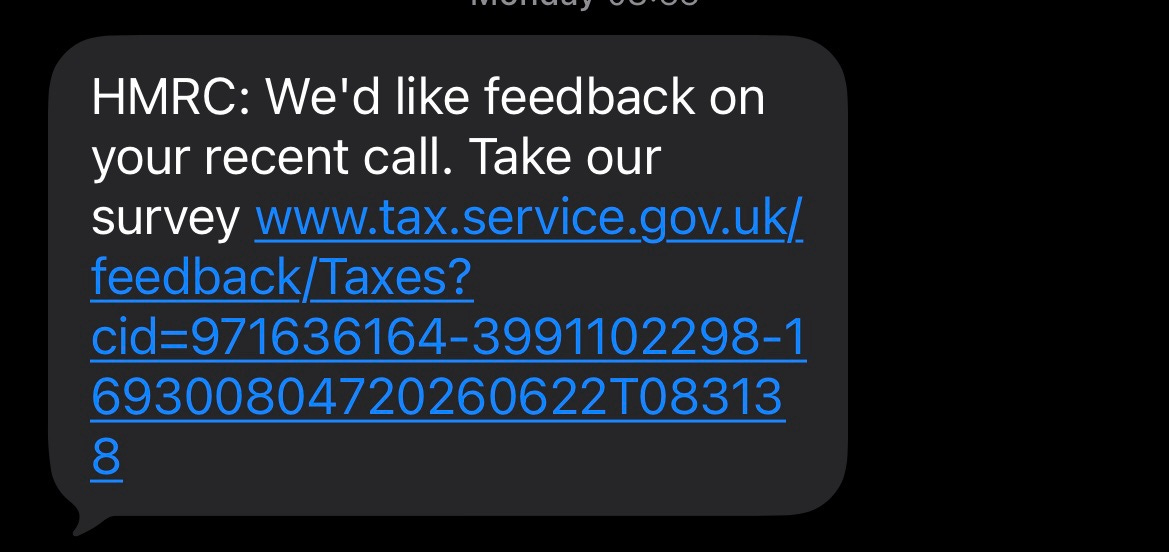
Not unsurprisingly, I decided against filling out the survey then, instead choosing to, you know, wait on the phone to solve my actual problem. I was met with a list of options for why I was calling, and selected the option that matched my problem.
A recorded voice politely suggested I complete my task online, and then hung up on me.
Watching the clock, I called again. This time, I tried a slightly different option. I was met with the same suggestion and the same polite hang-up.
I needed to get to work (and join in the office chat on the next round of political chaos) so, decided I’d try again at lunchtime.
Hours later, on my third attempt, I’d cracked the code. I selected an option that I hoped would enable me to speak to a human, and was right. The agent who answered was warm and well-intentioned. They helped me see what my pending message was – £116 in a rebate! Always better than being told you owe HMRC money.

What they couldn’t do was help fix the underlying access problem on my account, meaning that the next time they email and ask me to log in to my online account, I’ll be calling them back again.
As a customer, the whole experience was hugely frustrating and hugely time-wasting.
And as someone who works in Customer Experience – and I guess as a taxpayer funding the service – it’s painful to see failure demand in action. The struggle to log in. The repeated calls to try and get help. The inability to solve the root cause, meaning the problem continues. Extrapolate that across a nation of taxpayers, and you get a highly expensive service to run.
I appreciate Keir Starmer had more pressing tax-related issues to deal with. And you might argue that none of this matters, because HMRC has no competition. I cannot take my taxes elsewhere; there is no rival authority offering a better experience.
But I think that gets it the wrong way round.
When people have no choice but to deal with you, and when the subject is something as anxiety-inducing as money, the behaviours that earn trust matter more, not less.
A creaky, tired experience doesn’t cost HMRC customers. It costs something slower and harder to measure: the sense that the institutions we rely on still know what they’re doing.
In the meantime, the only certainty I have is that I’ll be ringing back next time I get an email asking me to log in, whoever the Prime Minister happens to be.
Thanks for reading this article, I really hope you enjoyed it. You can subscribe to my monthly newsletter below, find me in picture form on Instagram @johnjsills, or in work mode at The Foundation and LinkedIn.

