You’re reading CX Stories, a newsletter about customer experience innovation. If you want to join the 6000+ lovely people who receive it every month, just click the button below.
Around 2008, in the shadow of the financial crisis and the glow of this new device called an iPhone, a host of companies launched that redefined their sectors. Uber for transport, Spotify for music, Square for payments.
Alongside these was a company wanting to turn air-beds and sofas into genuine competition for hotels, making peer-to-peer room sharing the future of travel.
Airbnb is a business built on trust. By using it, you’re forgoing the certainty that comes from using an established brand, in favour of finding a unique stay, a good price, something more homely than an identikit bathroom with inexplicably unlabelled taps.
When it works, it’s spectacular. And I’ve had some truly brilliant experiences with it:
But over time, the prices have risen and the rooms have got worse. And when that certainty and trust go missing, the whole experience falls down.
Just as it did for me a few weeks ago.
I was heading to Birmingham to speak at a conference. The hotels seemed pretty expensive, so thought I’d try Airbnb instead. I found a decent place right by the station, which I needed as was arriving pretty late at night.
A couple of days before, the fun started (n.b. I’ve left the name ‘Sophie’ in as it was pretty clear this wasn’t the person’s real name).
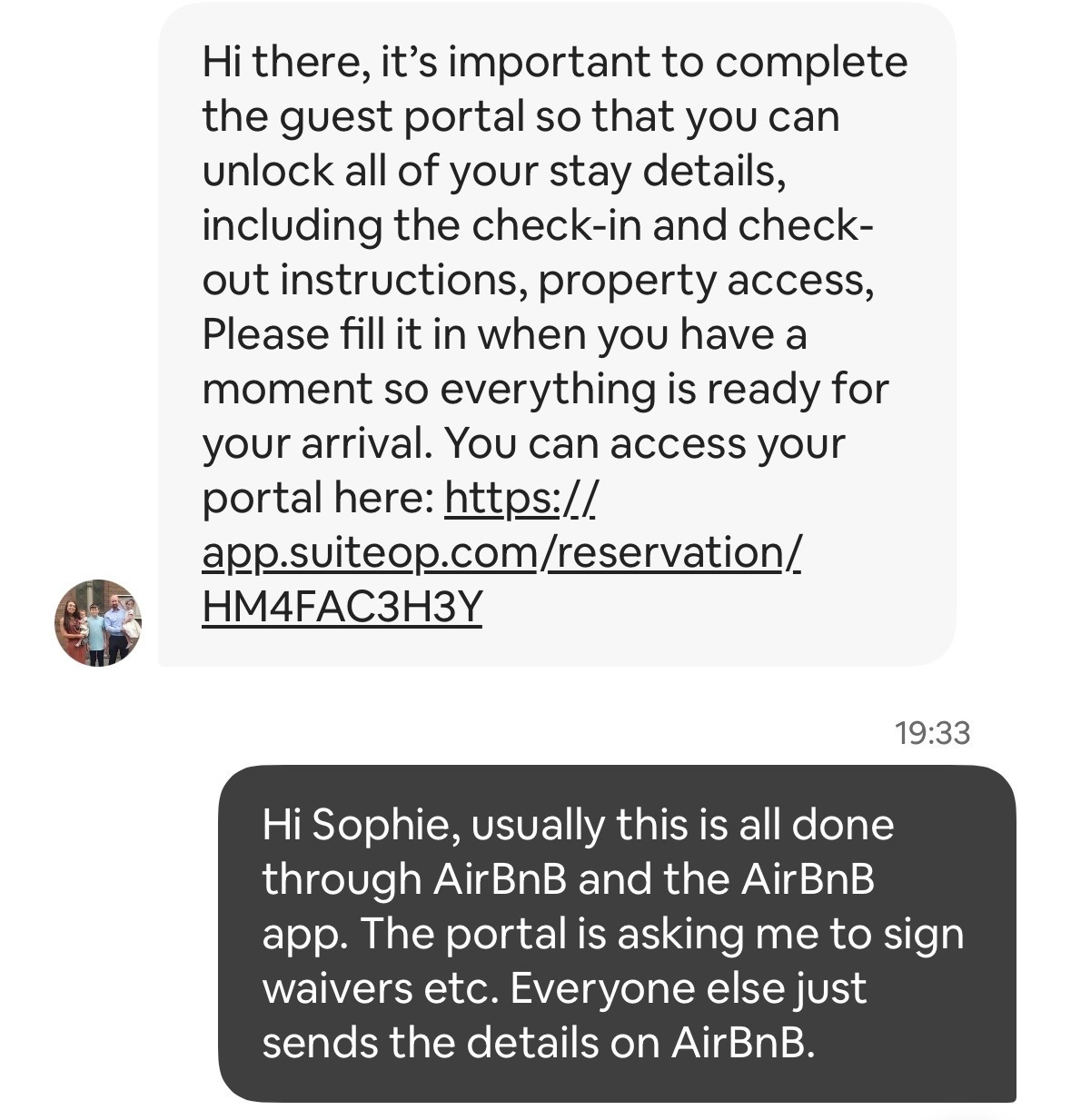
The link asked for a load of personal details, and for another waiver to be signed. For years Airbnb has taught me everything should be done through the app, and there was no mention of this waiver in the listing, so I tried to push back.
This did not go well.
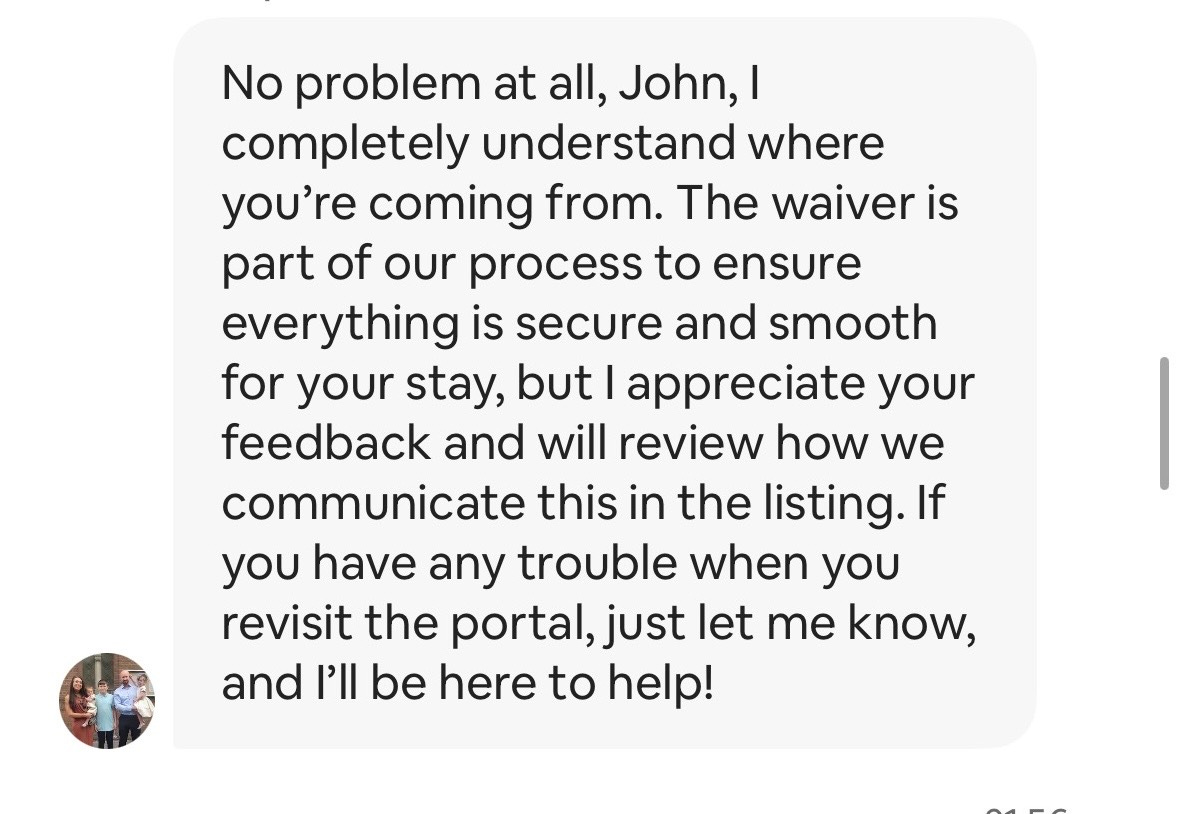
After several identical replies, all emphasising how this damage waiver was ‘to ensure everything is secure for my stay’, I got in touch with the previously-brilliant Airbnb support.
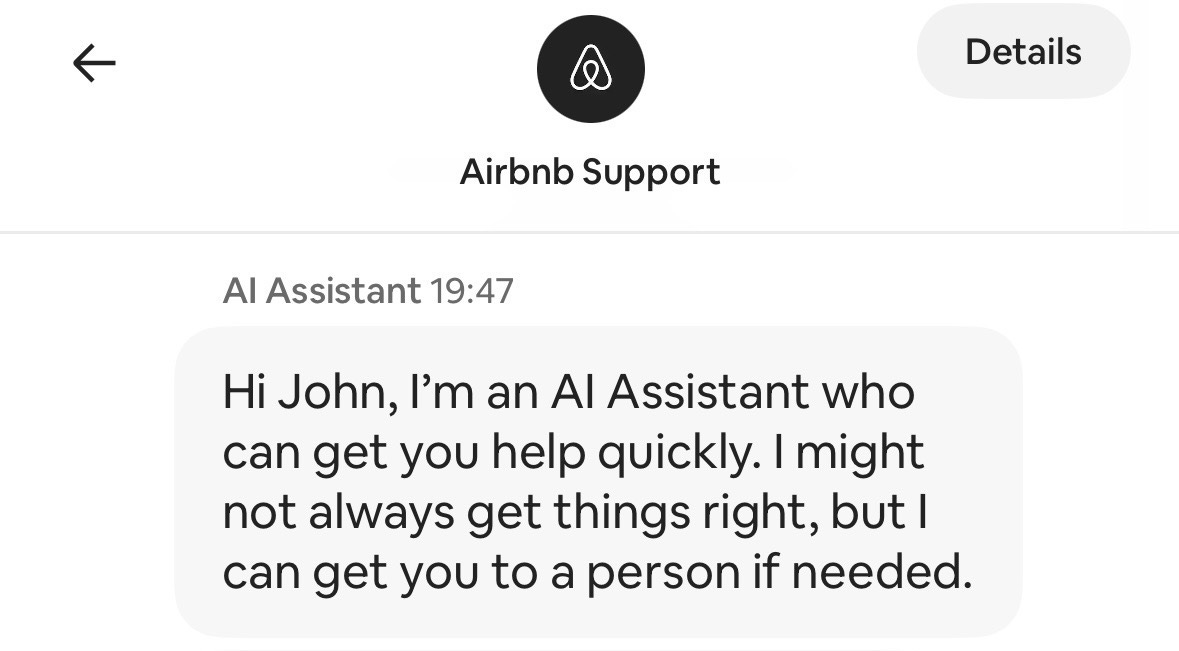
Uh-oh.
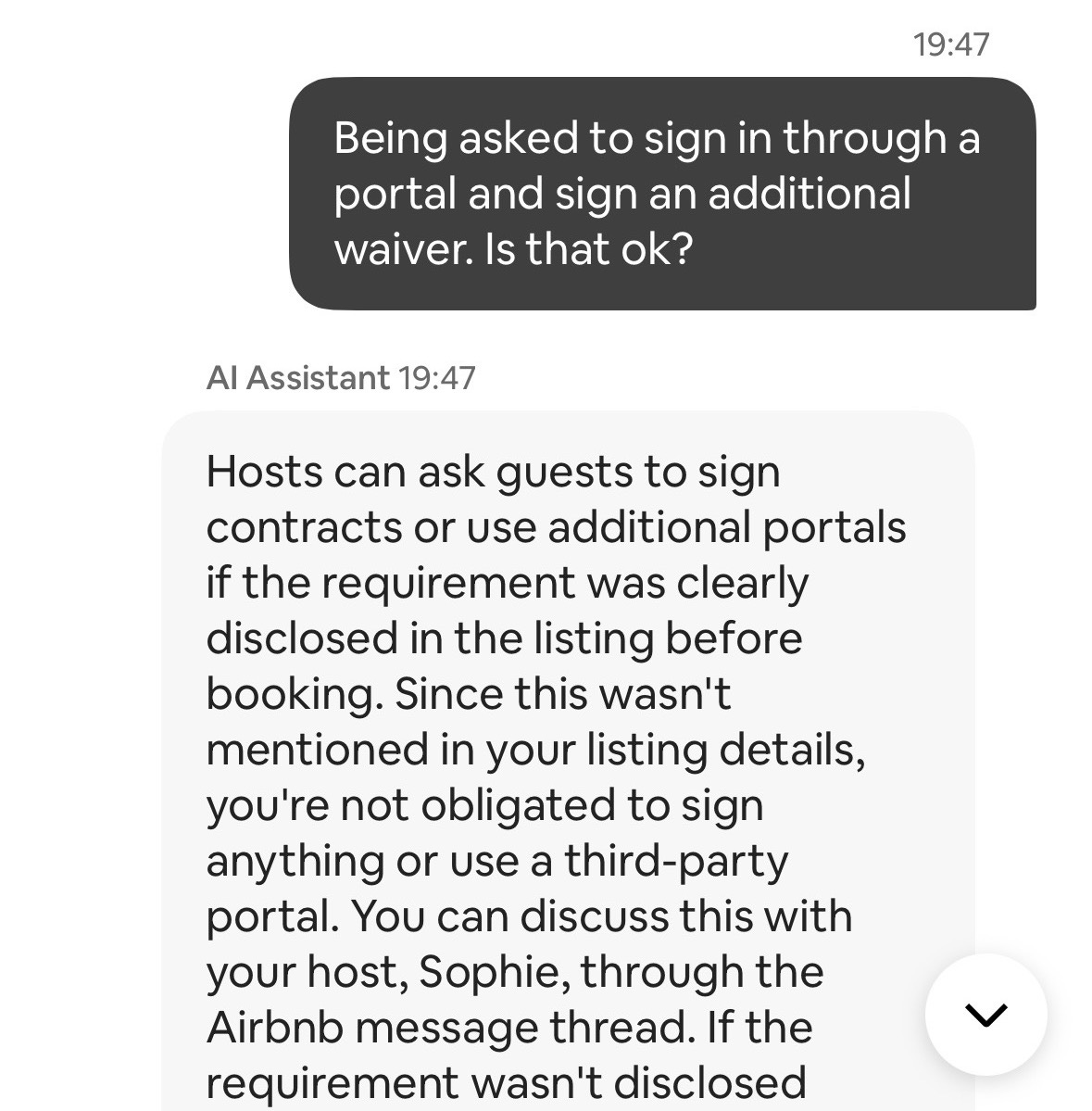
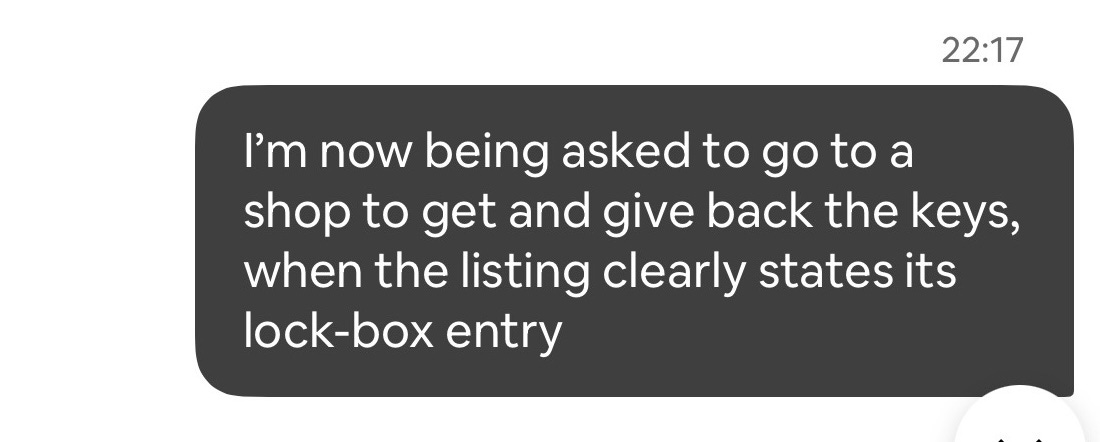
Before I had the chance to reply, I got another message from the host saying that, rather than get the keys from a lockbox, I had to go to a shop.
We all hate the ‘go to the shop’ option. Especially when it’s about half a mile in the opposite direction.
At first, the AI bot seemed like it was pretty helpful in its response
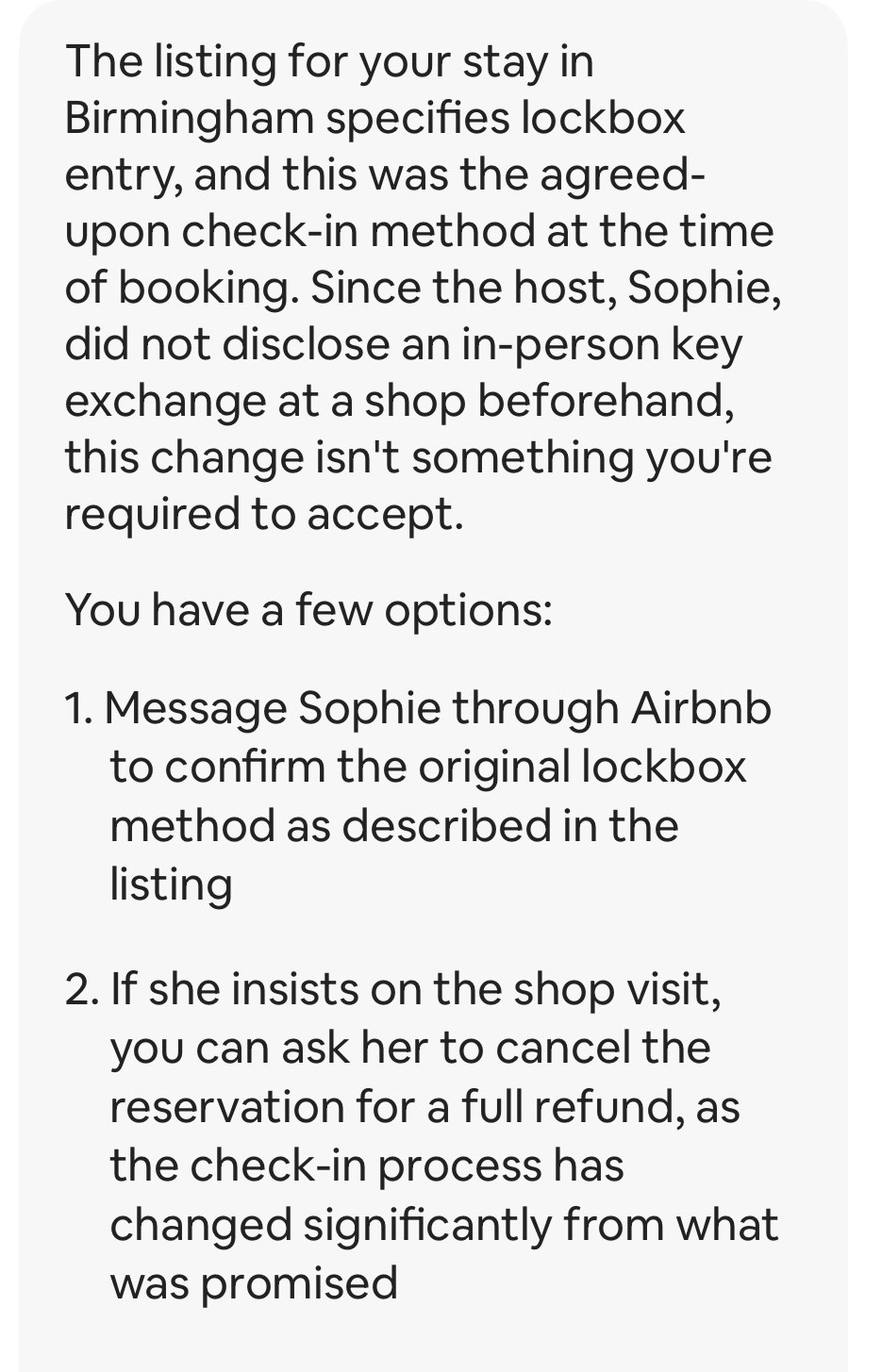
Great. Problem solved. I’ll cancel the Airbnb, grab a hotel, have the certainty of being able to walk in, drop my bags and head to bed.
Just before I did, I thought I should double check.
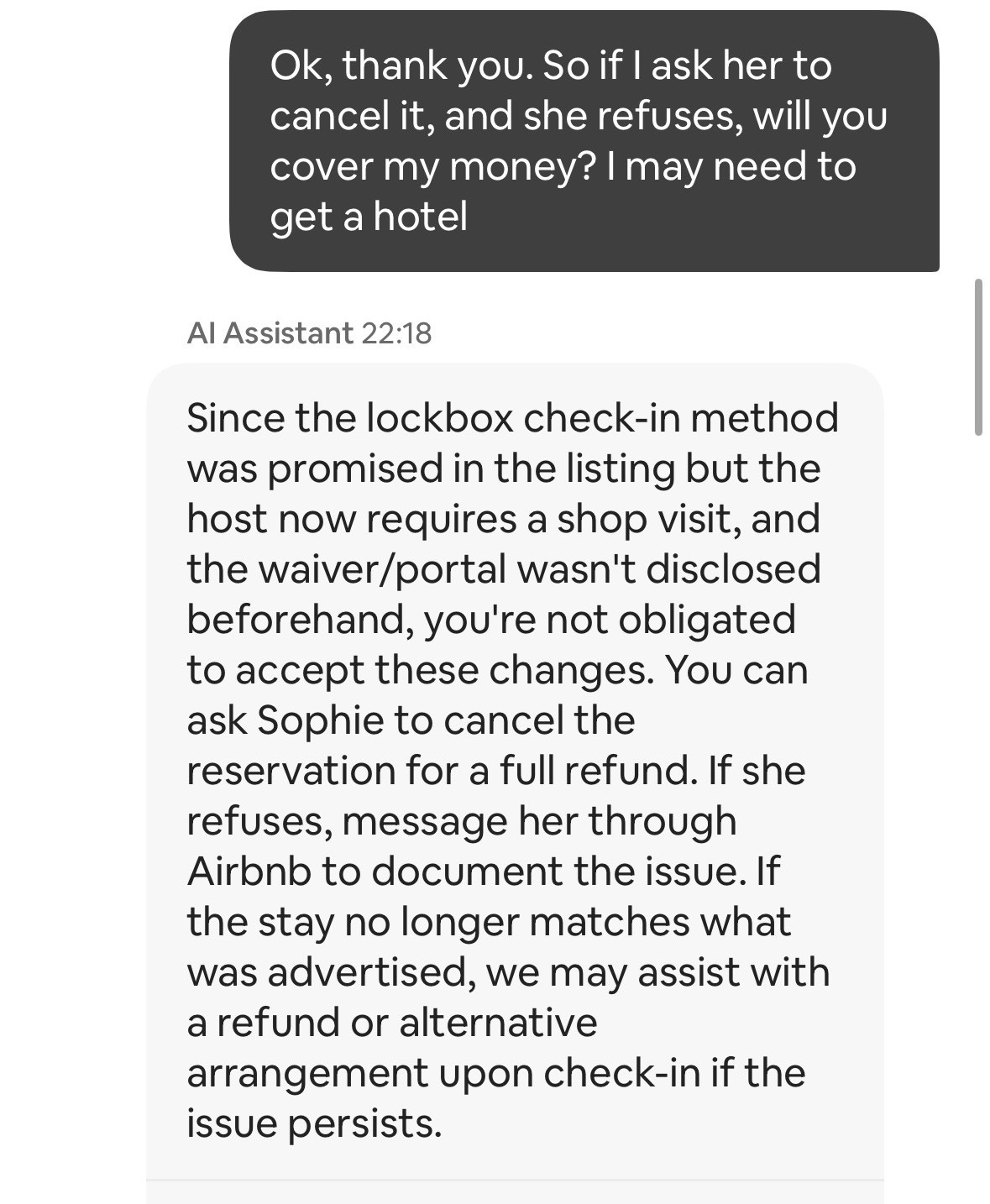
Hold up.
‘may’?
‘We may assist with a refund…’
I asked for a bit more certainty, and got the same back again. May.
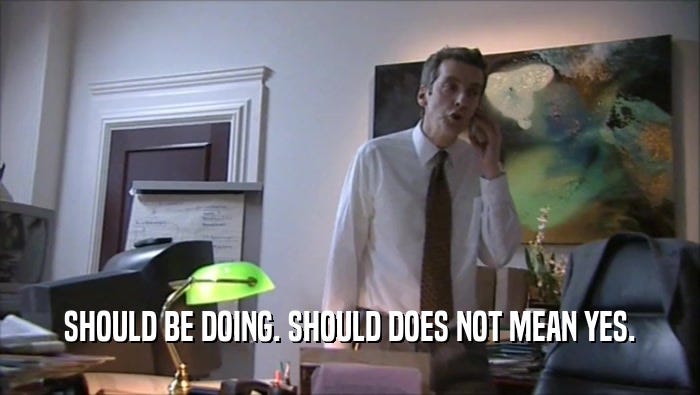
(It reminded me of the scene in the superb British political documentary sitcom, where ‘Should does not mean yes’. ‘May’ does not mean ‘we will’).
I asked to speak to a real human. And in fairness to the bot, it put me through pretty quickly.
However, it’s also fair to say that humanity made a pretty compelling case for submitting to the robots.
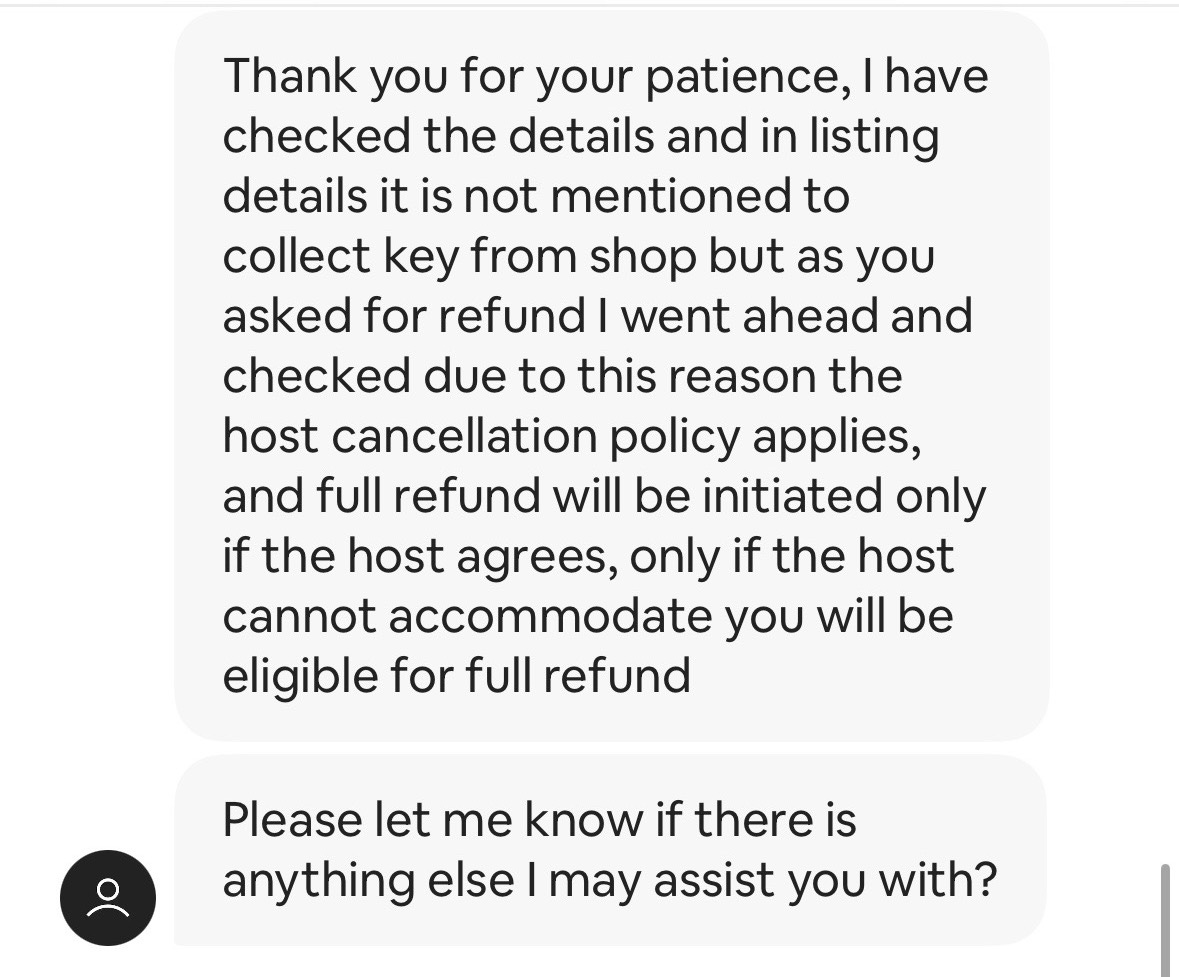
So, I asked whether, if I asked the host for a refund and they said no, Airbnb would cover the amount, as they have in the past…
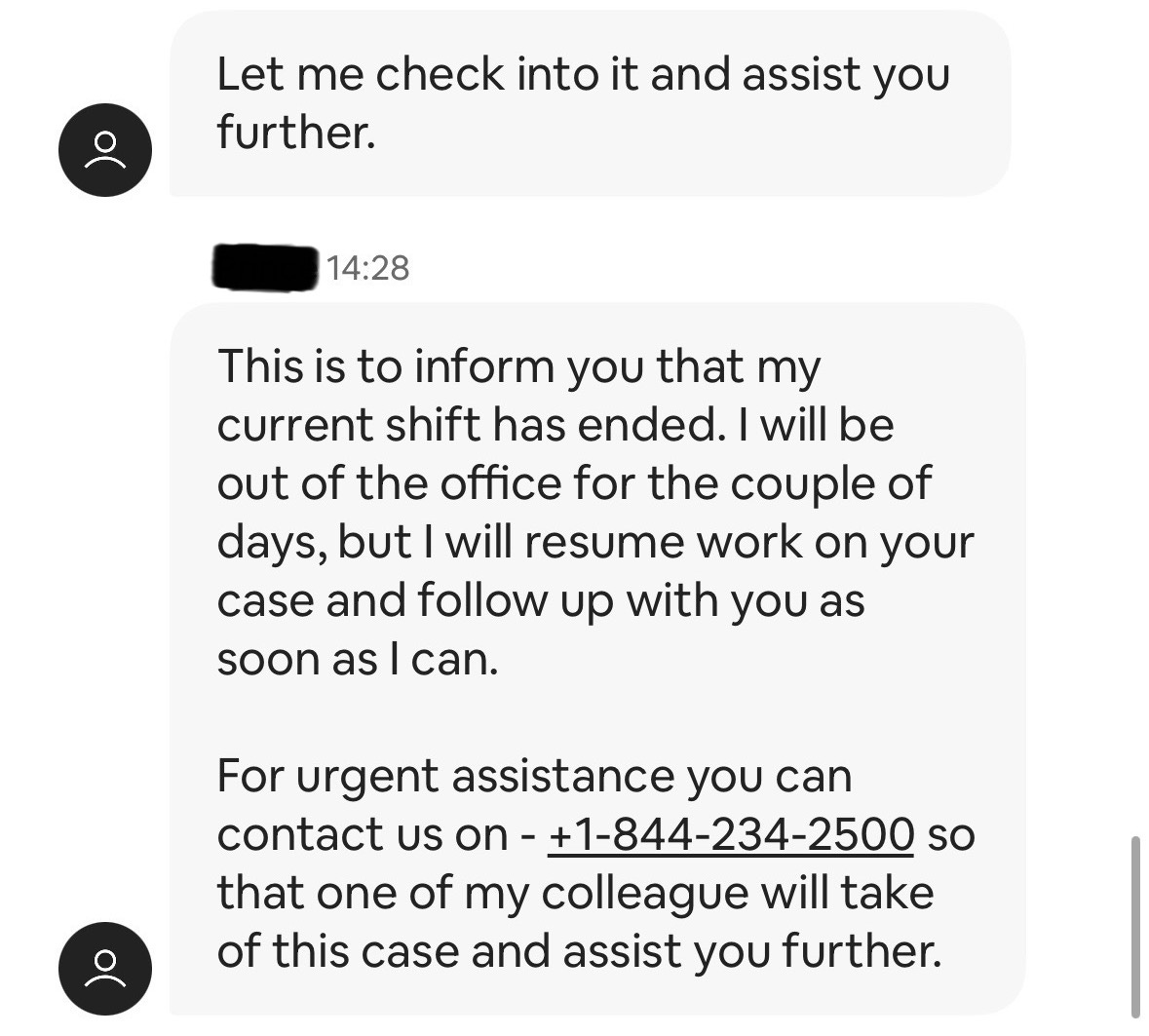
And that was that. No offer for anyone else to step in and help, just ‘I’m off for a couple of days, hope it all works out ok 👍’
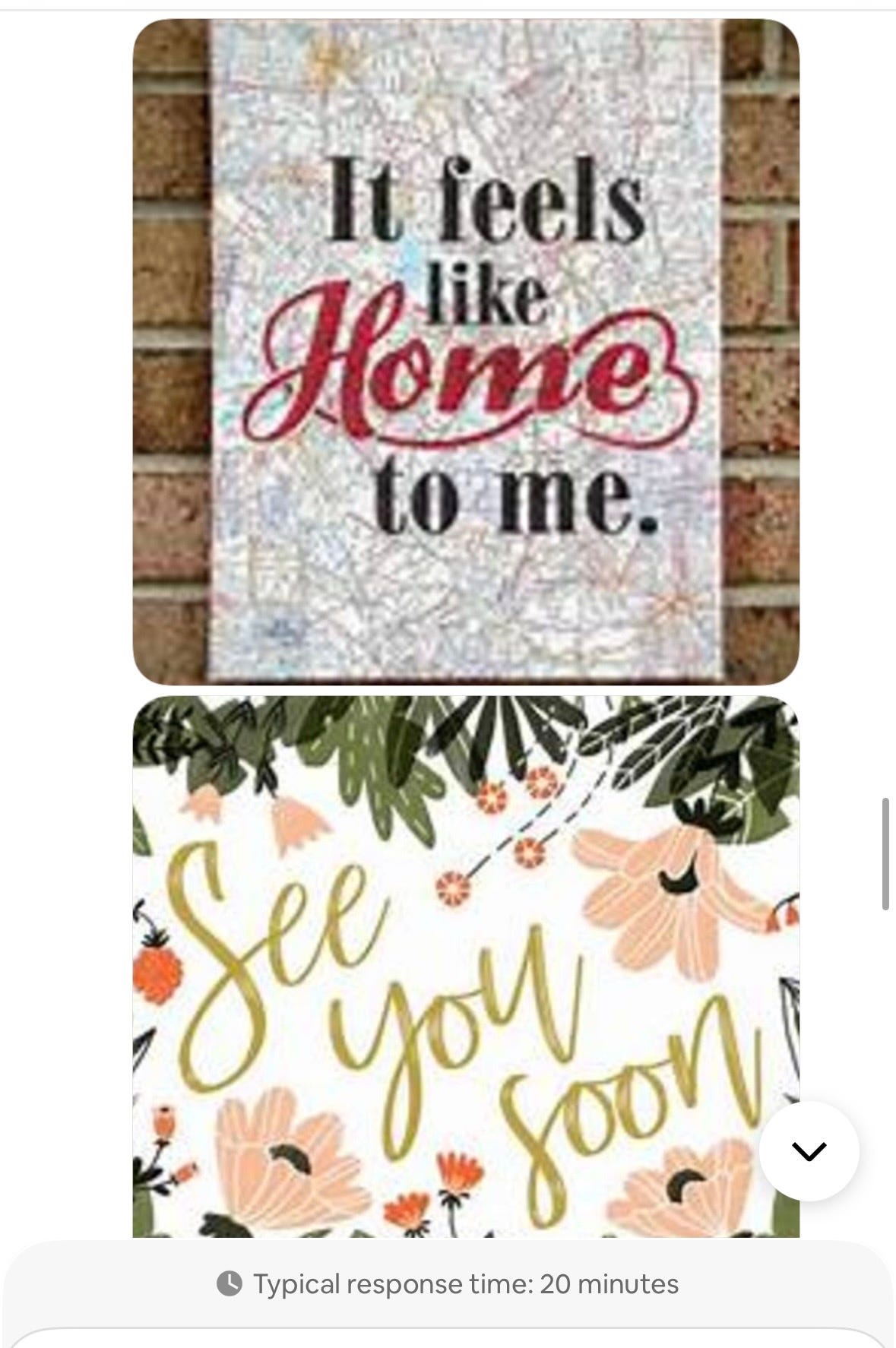
As for my human host, well, ‘she’ was clearly a company with a number of properties, and a host of pre-prepared message templates to be sent at the right time. With no hint of recognition of the ongoing issue, these lovely images appeared halfway through the chat:
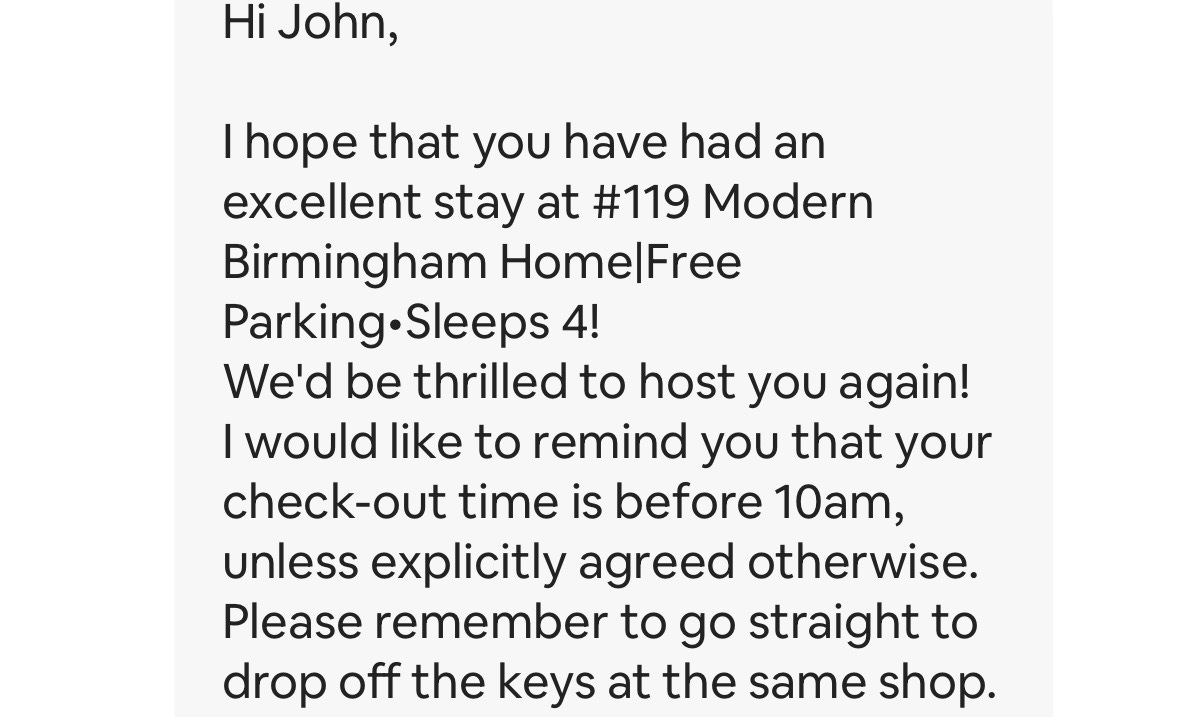
And on the morning I was due to leave, this beautifully personal message, full of warmth, and not a hint of irony.
It doesn’t matter how old or young a business is, whether it’s an incumbent or a challenger, on an app or in a store. Creating certainty, taking ownership, and dealing with problems are at the heart of a great customer experience – and there’s no ‘may’ about it.
Thanks for reading this article, I really hope you enjoyed it. You can subscribe to my monthly newsletter below, find me in picture form on Instagram @johnjsills, or in work mode at The Foundation and LinkedIn.
 johnJsills