You’re reading CX Stories, a newsletter about customer experience innovation. If you want to join the 6000+ lovely people who receive it every month, just click the button below.
When Paula Vennells walked into the Post Office Inquiry in May 2024, the room was heaving with journalists from every major newspaper.
Only three seats had been reserved in the press gallery: two for journalists Karl Flinders and Nick Wallis, who had broken the story early on, and one for John Hyde, editor of the Law Society Gazette, who’d been covering the inquiry from day one.
As it happens, John and I go back a long way. A very long way, to a time when Clacton-on-Sea was more famous for seaside fun than for Nigel Farage. From the age of three, we’d be hanging out on the pier, in the parks and – eventually – in the pubs.
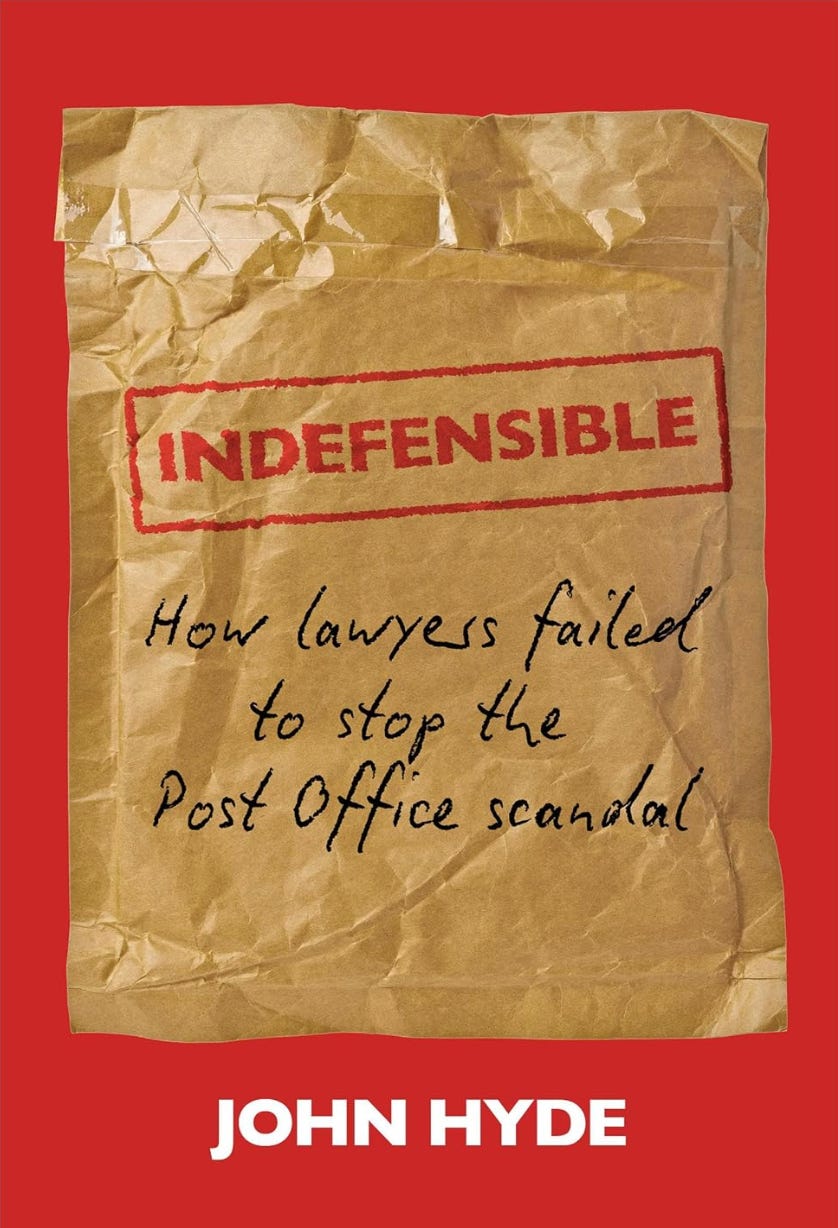
In the years since, our careers have taken us on very different paths. But with the release of John’s new book – Indefensible – it seems those paths have converged around one very important question: why do good organisations end up doing bad things?
By now, you probably know all about the Post Office scandal. It’s the biggest miscarriage of justice in British legal history, with nearly a thousand subpostmasters wrongly convicted of theft or false accounting.
(For many people, the scandal came to their attention through ITV’s dramatisation ‘Mr Bates vs The Post Office’, fuelling a collective national anger).
Whilst most writing on the topic focusses on the technology – how the Post Office believed the Fujitsu Horizon system to be infallible, and therefore the only possible answer was that hundreds of previously unblemished subpostmasters were thieves – John’s book takes a different angle. He looks at the lawyers involved who, rather than revealing the truth, ended up reinforcing the existing beliefs within the organisation.
At The Foundation, we talk a lot about shared beliefs. In The Customer Copernicus – another book I’d highly recommend, written by Charlie Dawson and Sean Meehan – this is the central argument about how to be customer-led: the organisation has to have a shared belief that being customer-led will lead to commercial success.
But even something as obvious as being customer-led is easy to say and hard to do, because we all see the world from the inside out.
We can’t help it. It’s how our brains work: we’re more focussed on what’s close to us than we are on things in our periphery. It’s why we draw maps of the world the way we do.
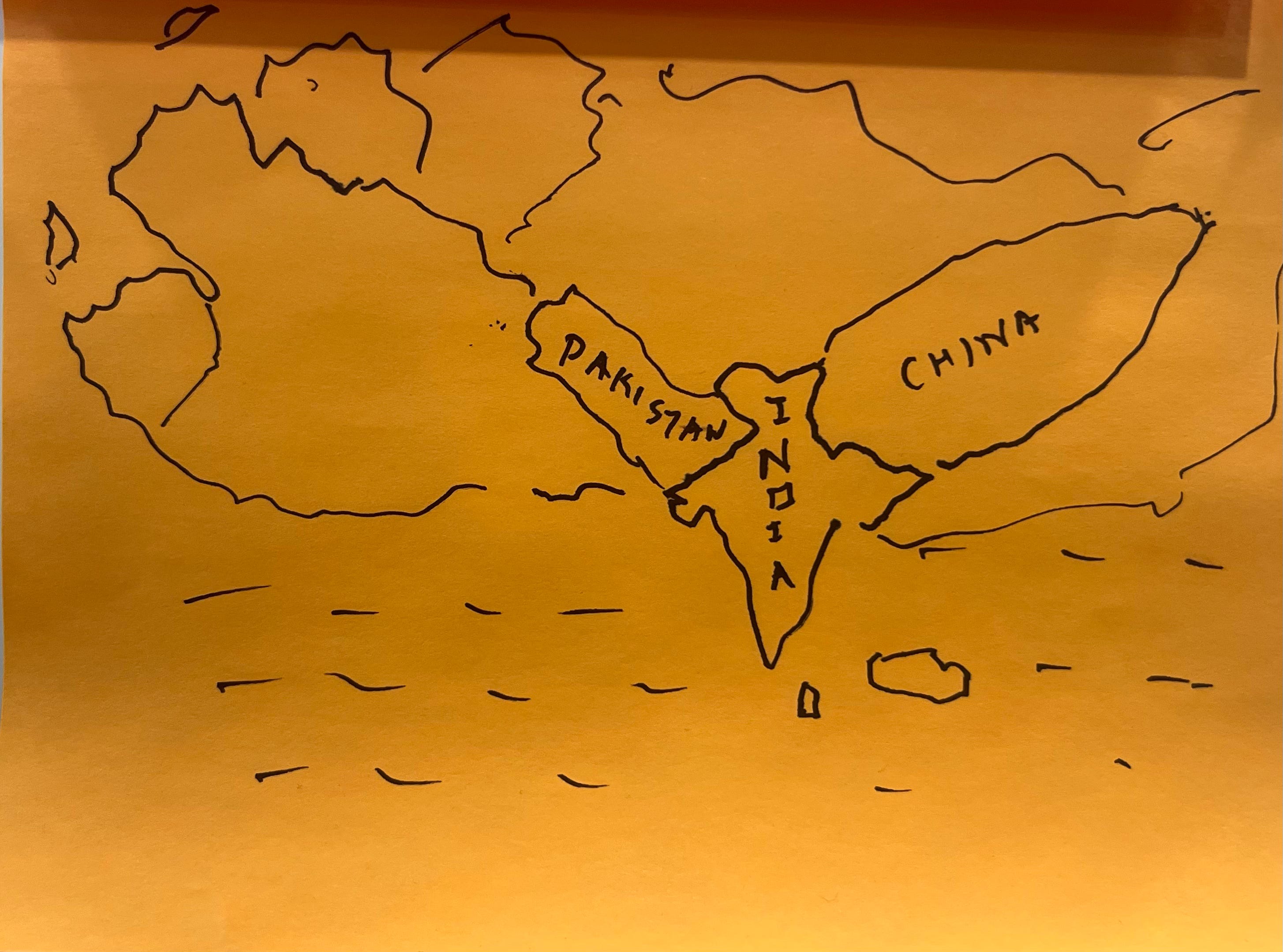
In organisations, this means being closer to colleagues, competitors, regulators and shareholders than we really are to our customers. We know customers are really important, but in the day to day of doing business, we’re surrounded by more immediate and pressing issues.
Data presented in emails, PowerPoints and PDFs makes this worse, putting a dehumanising layer between leaders and the felt reality of customers.
And the more senior people become, the less connected they are to the people they serve, both because they spend less time with them, and because, with a rise in salary, they’re likely to live less like them.

Just as having shared beliefs can help create good outcomes, sharing a belief in the wrong thing can lead to disastrous ones.
I don’t know enough about the personalities involved in the Post Office scandal to say for sure whether they were good or evil. But I would suspect it’s unlikely that any of them joined the company thinking ‘finally, here’s my chance to wrongly convict and imprison hundreds of innocent pillars of the community, just for fun’.
More likely is that they got sucked into the inside-out vortex that was spinning at full speed inside the organisation; that they got so focussed on the mission at hand – to protect the Post Office’s reputation and its investment in the Horizon system – that they became blind to the reality of the situation, and to all the inconvenient truths that were there for all to see.
Beliefs often start small, one conversation, one case, a single decision that needs to be protected by the next, bigger action. But once a belief starts to grow, all rational thinking can stop.
More often than not, beliefs are fuelled by incentives which validate the decision or behaviour, subconsciously encouraging more of the same. As Charlie Dawson says, for all the talk of how to create a great culture in an organisation, behaviours often come down to just two things: what you get praised for, and what you get told off for.
That’s why people inside the Post Office believed the Horizon system was infallible, why they had to believe the system was infallible, and therefore why they had to believe that these people were criminals: because it was the belief on which everything else was built.
It’s why they pressured experts to change witness statements, why they sent emails talking about crushing the ‘Horizon Bashing Bandwagon’, why they ignored documents that suggested they might be wrong.
It’s why they had no central file linking together all of these similar cases. Why they suggested deals at the last minute, forcing defendants into panicked ‘guilty’ pleas. Why they celebrated the conviction and imprisonment of an innocent pregnant woman, Seema Misra.

Of course, inside-out thinking doesn’t excuse the intolerable and potentially illegal decisions made within the company. And it certainly doesn’t excuse the failure to apologise and put right the wrongs, once the true picture became clear.
But over time, inside-out thinking creates a loss of connection to reality, leading to behaviours that once would have been seen as reprehensible being seen as acceptable – or worse, encouraged – as long as they’re achieving the overall goal.
Or, to paraphrase the late, great Daniel Kahneman:
‘People can maintain a belief, however absurd, if surrounded by a group of like-minded thinkers’
In the customer experience world, the answer is to get out of the office and spend more time with real customers, visiting their homes, going shopping with them, experiencing first-hand what really matters to them in their lives.
For the Post Office, perhaps the leadership taking the time early on to meet the accused and hear their side of the story would have made it obvious that something didn’t add up between what they were reading on paper and the confused, and innocent, people sat in front of them.
Thanks for reading this article, I really hope you enjoyed it. You can subscribe to my monthly newsletter below, find me in picture form on Instagram @johnjsills, or in work mode at The Foundation and LinkedIn.

